
What is Buying Local?
Share
What "Buying Local" Really Means
We've all seen it on signs, heard it at farmers markets, read it on packaging. Buy local. It's become such a common phrase that it risks sliding past us without landing. So what does it actually mean — and why does it matter?
At its simplest, buying local means choosing products made, grown, or produced close to home, by people you could theoretically look in the eye. But the real meaning goes deeper than geography.
It's a vote.
Every purchase is a small decision about what kind of economy you want to live in. When you buy from a local farm, bakery, or maker, you're directing money into your community rather than into a distant supply chain. That money tends to circulate — the farmer buys supplies locally, pays employees locally, invests locally. Economists call this the "local multiplier effect." We just call it money staying where it belongs.
It's a relationship.
Mass production is designed to remove the human element. Products are standardized, sources are anonymous, and the story behind what you're consuming is deliberately kept vague. Buying local puts the human back in. You know who grew it, where, and often under what conditions. That accountability changes things — for the producer and the consumer.
It's about preservation.
Small farms, family businesses, and local producers are fragile. They don't have the cushion that large corporations do. When a local farm loses customers, it doesn't restructure — it closes. And once farmland is gone, it rarely comes back. Choosing local is one of the quietest and most powerful ways to keep something worth keeping alive.
Now narrow it to Hawaii Coffee — and things get interesting.
Hawaii is the only state in the entire United States that commercially grows coffee. Of all the coffee produced in the world, Hawaii accounts for just 0.1% of global supply. A fraction of a fraction. Which means that every bag of Hawaiian coffee is, by definition, rare.
Most commercial coffee is built for consistency, not character. Beans from multiple origins are blended to iron out the differences between harvests and keep costs predictable. The story gets blurred on purpose. Hawaiian coffee can't hide like that — at 0.1% of world supply, there's simply not enough of it to be anonymous. You can know the island, the farm. That traceability isn't a marketing angle — it's just the reality of small-scale farming.
There's also a labor dimension worth understanding. Hawaii's minimum wage is $16 an hour — more than double the federal minimum — and it's on a path to reach $18 by 2028. That's the floor for farm workers here. Coffee-growing regions elsewhere in the world operate under vastly different conditions. When you choose Hawaiian coffee, you're supporting farmers and workers operating under some of the strongest labor protections in the country. That has a cost, and it's a cost worth knowing about.
Which brings us to the Hāmākua Coast.
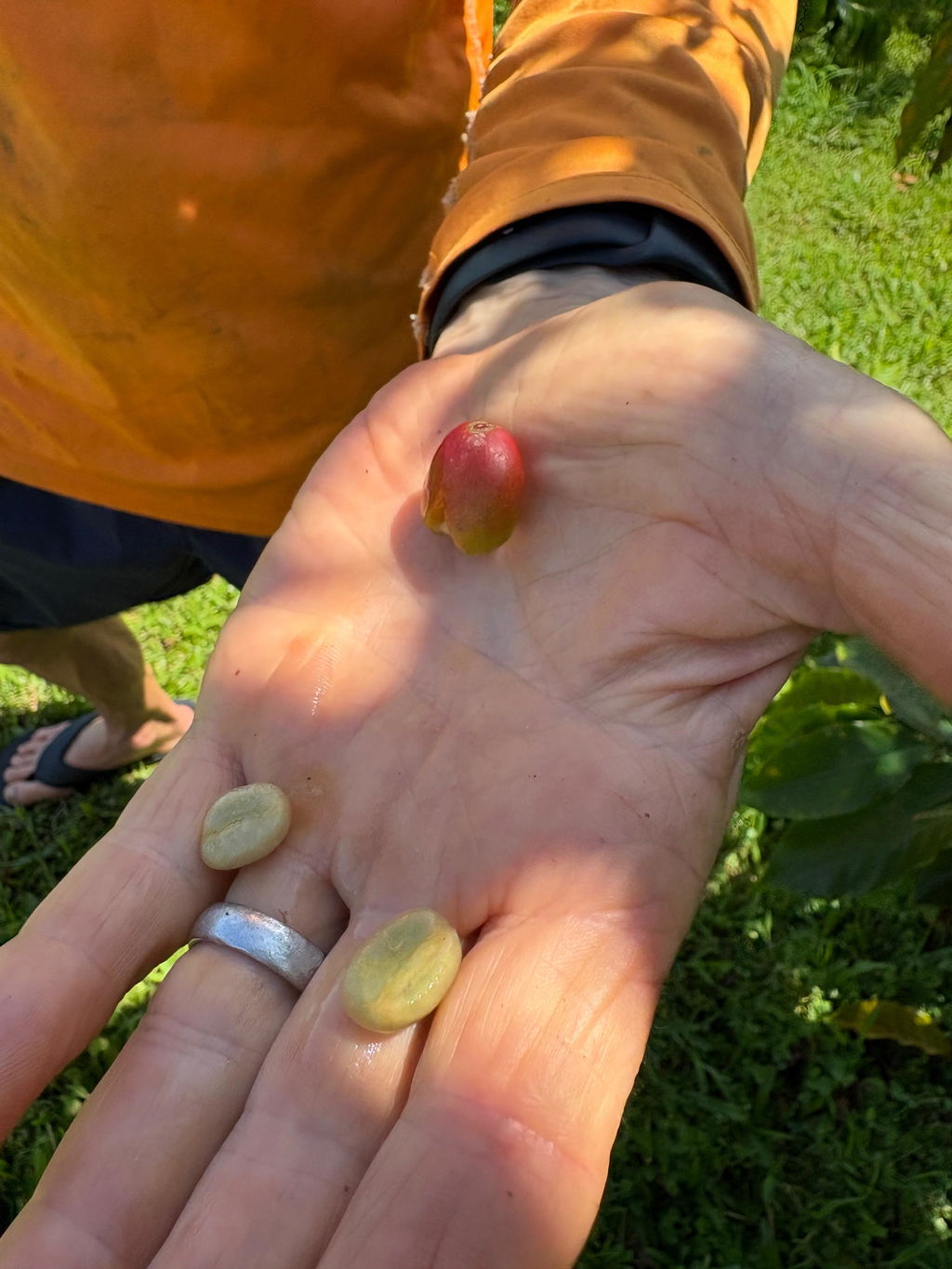
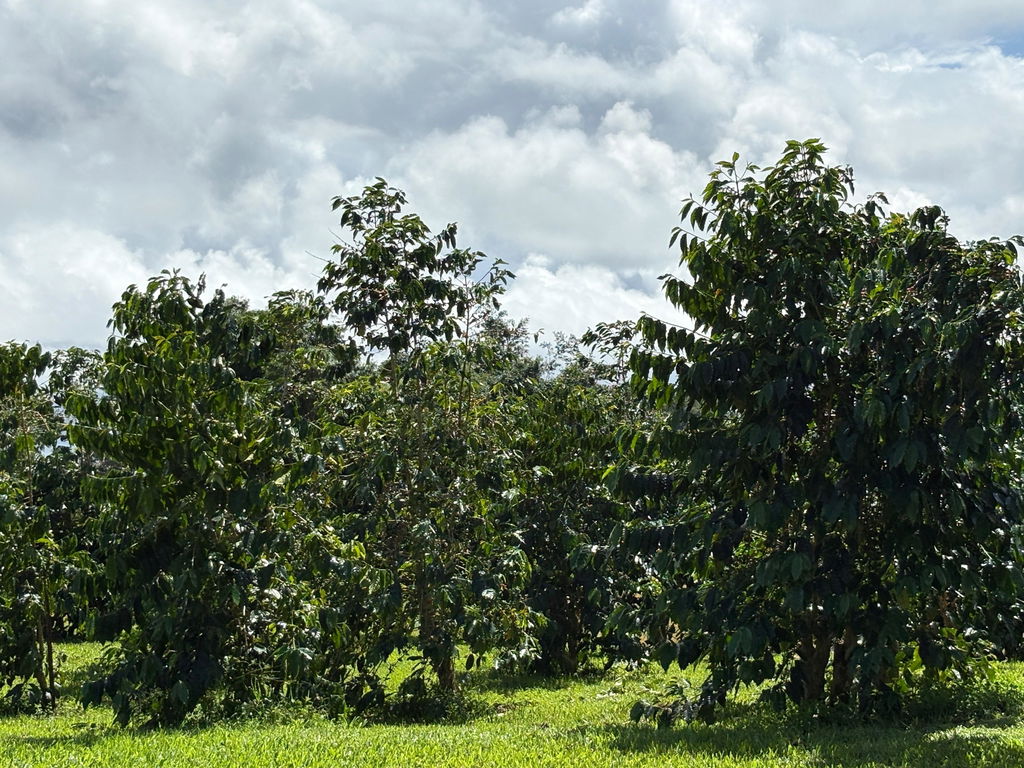
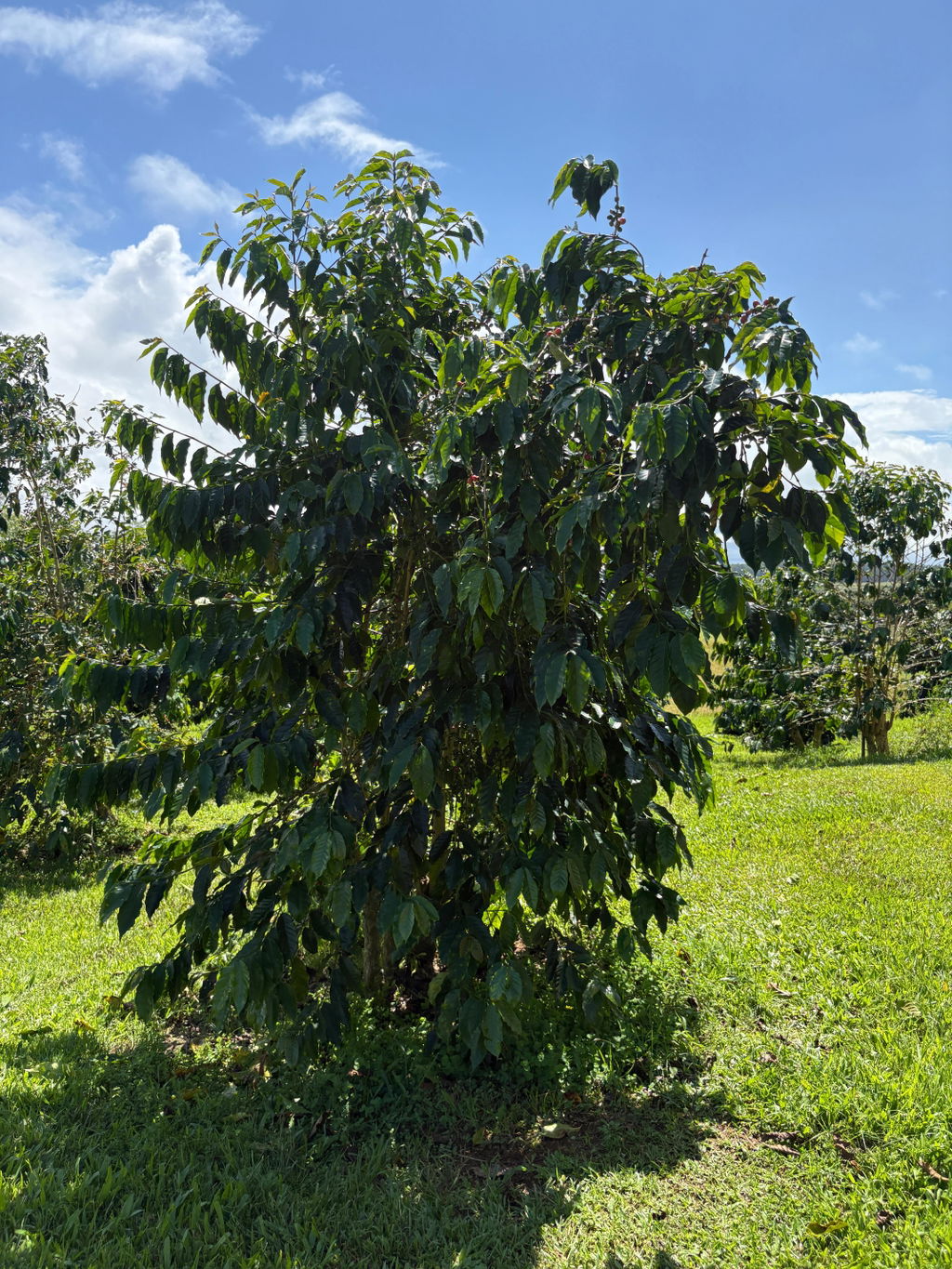
Hog Heaven Coffee in Ninole is a small family farm on the northeast part of the Big Island. We grow our coffee by hand, pick our cherries at peak ripeness, and roast every batch right here. Our harvest fluctuates from bountiful to lean. Each season brings its own challenges. There's no global supply chain to bail us out, no blending to hide a tough year. What we grow is what we have.
We share our farm with six Holstein cows and four dogs, all rescues who take their jobs very seriously. We send newsletters when we have something worth saying. We offer farm tours because we genuinely believe that seeing where your coffee comes from changes how you drink it.
That's what buying local really means, at least to us — not a slogan, not a premium price point, but a connection to a real place and the people who tend it.
Shop Our Coffee | Book a Farm Tour | Join Our Coffee Club
Hog Heaven Coffee is grown and roasted on the Big Island of Hawaii. Online orders ship nationwide. Farm tours available by appointment.