
Cold Brew vs. Iced Coffee
Share
Cold Brew vs. Iced Coffee: Time vs. Heat — What's the Difference?
Discover the real difference between cold brew and iced coffee — from brewing method to taste. Plus, learn how to make cold brew at home using our award-winning 100% Hāmākua coffee.
Have you thought about drinking cold brew or iced coffee, but weren't sure about the difference? Well, you're not alone. Both are served cold, both deliver that caffeinated lift you're after — but they are made in fundamentally different ways, and the difference ends up in your cup.
It All Comes Down to Time vs. Heat
Iced coffee is exactly what it sounds like: hot-brewed coffee, served over ice (or chilled). It's quick, it's familiar, and it works. Cold brew, on the other hand, never meets heat at all. Instead, it relies on time — typically 12 to 24 hours of slow steeping in cold or room-temperature water — to coax the flavors out of the grounds. The result is a coffee that's chemically and texturally distinct from anything brewed hot.
|
Cold Brew |
Iced Coffee |
|
|
Brewing method |
Cold water steep, 12–24 hours |
Hot brew, poured over ice or chilled |
|
Acidity |
Low |
Higher |
|
Flavor |
Smooth, concentrated, complex |
Bright, familiar, can be bitter |
|
Caffeine |
Higher per ounce (concentrated) |
Standard, diluted by ice |
|
Shelf life |
Up to 2 weeks refrigerated |
Best same-day |
Making Cold Brew at Home
There are cold brew-specific tools designed to make the process even easier — from simple steeper pitchers with built-in filters (like the popular Toddy system) to elegant Kyoto-style drip towers that slowly drip cold water through grounds over hours. A French press also works beautifully as a no-fuss cold brew vessel. Equipment ranges from around $15 to a few hundred dollars depending on how deep you want to go.
That said, you don't need any of it. Here's the straightforward manual method:
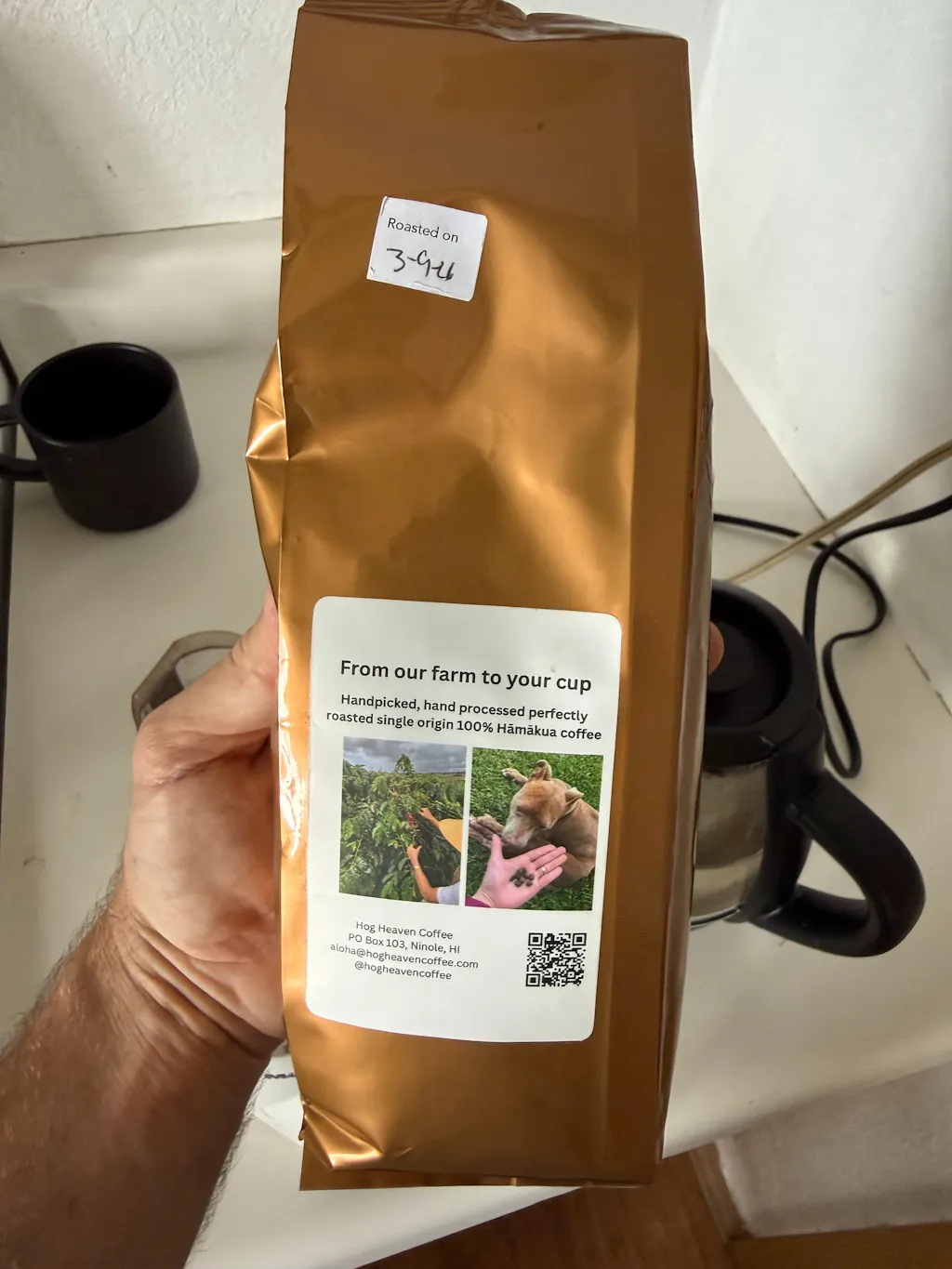
- Start with quality, coarsely ground coffee. This matters more than any other step. Cold brew amplifies whatever character is already in the bean — which is exactly why we recommend starting with a single-origin Hawaii coffee like Hog Heaven Coffee. When the flavors have nowhere to hide, you want ones worth tasting.
- Combine grounds with cold, filtered water in a large jar. Stir well to make sure every ground is fully saturated. A general ratio to start with: 1 cup of grounds to 4 cups of water. Adjust to your preference over time.
- Cover the jar loosely. You want to keep contaminants out while allowing gases to escape — this is especially important with freshly roasted coffee like Hog Heaven Coffee, which continues to off-gas CO₂ after roasting. A loose lid, breathable cloth, or plastic wrap with a small opening all work well.
- Steep for 12–24 hours. The longer the steep, the stronger and more concentrated the result. Start at 16 hours if you're unsure, then experiment from there.
- Strain out the grounds. Use a paper coffee filter, fine mesh strainer, or cheesecloth. Take your time — a slow strain means a cleaner cup.
That's it. Drink it straight, over ice, or diluted with water or milk. Stored in the fridge, it keeps for up to two weeks.
What About Iced Coffee?
Iced coffee is the faster route: brew hot, pour over ice, enjoy. Just keep in mind that ice dilutes both flavor and caffeine as it melts, so it's worth brewing a little stronger than usual — think a slightly higher coffee-to-water ratio than your normal hot cup. For a less diluted option, try brewing directly into a container and refrigerating overnight before pouring over ice.
How Do They Actually Taste Different?
This is where cold brew earns its following. Because no heat is involved, cold brew extracts fewer of the acidic and bitter compounds that hot water pulls out of coffee. The result is noticeably smoother and sweeter-tasting — even without adding cream or sugar. Those who normally doctor their coffee may find they don't need to with a good cold brew.
Because the flavor is more concentrated, you also get a cleaner read on the coffee's natural notes — the subtle fruit, chocolate, or floral qualities that make a well-grown bean interesting to drink.
If your coffee tends to taste harsh or bitter, that's often a roast or brewing issue — but cold brew can help bridge the gap. And if you haven't tried a smooth, naturally low-acid coffee to begin with, that's a great place to start. Our Hog Heaven Coffee is grown at 1,400 ft elevation on the Big Island of Hawaii — conditions that naturally produce a sweeter, more nuanced cup, whether you brew it hot, cold, or anywhere in between.
Frequently Asked Questions
Do I need special equipment to make cold brew? Not at all — a jar and a strainer is all you need (see the manual method above). That said, dedicated cold brew makers do make the process more convenient, especially for straining. A French press is probably the easiest equipment upgrade if you already own one.
Why is my cold brew bitter? A few culprits: grounds that are too fine, steeping too long (beyond 24 hours), or starting with low-quality or over-roasted beans. Try a coarser grind and pull it at 16–18 hours. If bitterness persists, the beans themselves may be the issue — a naturally low-acid, well-grown coffee makes a significant difference.
How long does cold brew last in the fridge? Up to two weeks as a concentrate. Once diluted, drink it within a few days. Always store in a sealed container.
Have more questions about brewing, our coffee, or farm life in Ninole? Visit our FAQ page
Grown in Ninole, Hawaii. Small farm, real coffee. Shop Hog Heaven Coffee